
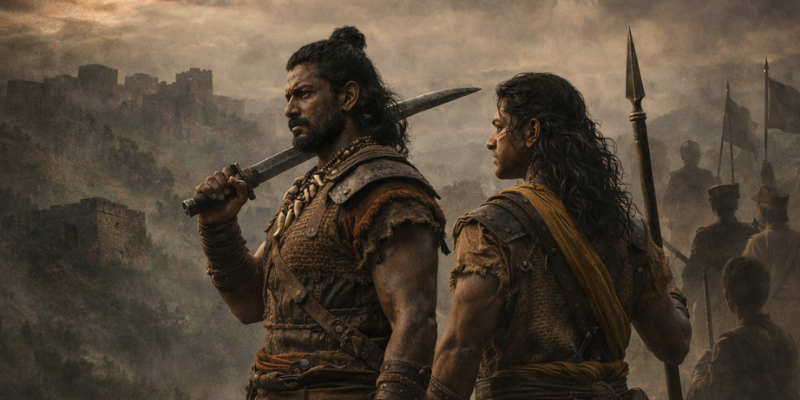
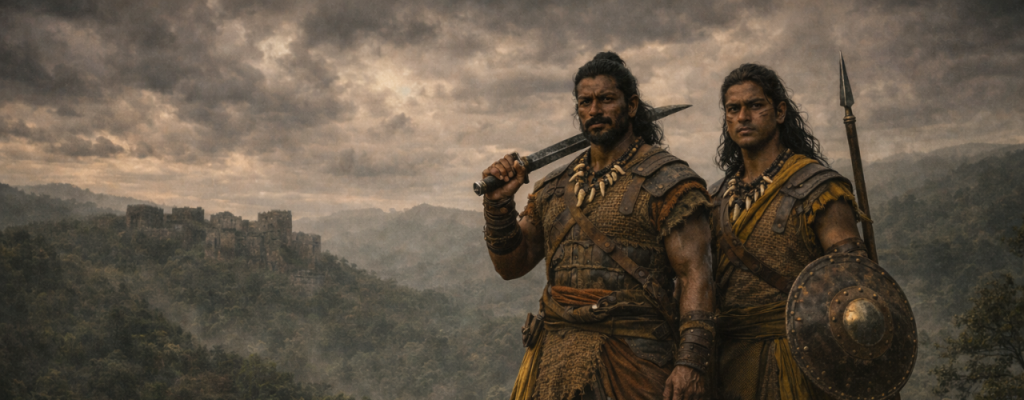
Defenders of sovereignty, symbols of courage, and legends of 16th-century eastern India.
Nilambar and Pitambar were legendary tribal warrior kings of eastern India.They fiercely resisted Mughal expansion in the 16th century.Their courage remains a symbol of tribal pride and sovereignty.
Nilambar and Pitambar’s 16th-century resistance against imperial rule became a lasting symbol of tribal courage, inspiring later generations and contributing to the spirit of defiance that resurfaced during India’s 1857 uprising.
Inspiring Rebellion
Early Roots of Resistance
Although Nilambar and Pitambar did not participate in the 1857 uprising, their fierce resistance against Mughal authority in the 16th century laid the foundations of tribal defiance in eastern India. Their struggle for land, autonomy, and self-rule became part of the collective memory of tribal communities. This legacy of resistance later echoed in movements like the 1857 uprising, where indigenous leaders once again rose against colonial domination. Nilambar–Pitambar thus stand as early symbols of the spirit that eventually fueled India’s larger freedom struggles.
Explore Sections
Quick links to major sections
Easily explore the key sections of the site to uncover the remarkable history of Nilambar and Pitambar. Learn about their fearless resistance against imperial forces, their enduring legacy, cultural influence, visual galleries showcasing portraits and memorials, and the significant impact they had on tribal identity, heritage, and regional pride.
Key Quotes
Wisdom & Legacy
This section highlights the inspiring words and enduring legacy of Nilambar and Pitambar. It showcases memorable quotes, reflections on courage, resistance, and leadership, and summarizes their lasting impact on tribal identity, culture, and the spirit of defiance that inspired generations.
Example Quotes:
- “Courage is the first step towards freedom.”
- “Defend your land, preserve your heritage.”
- “Defend your land, preserve your heritage.”
- “Every stone of our land tells the story of those who protected it.”
- “Strength lies not in weapons, but in the courage to defend what is right.”

Legacy Highlights:
- Their story continues to inspire pride and unity.
- Preserved tribal cultural and spiritual identity.
- Inspired later movements for freedom and self-rule.
- Defenders of sovereignty and local governance.
- Early symbols of tribal resistance in eastern India.