
Martyrdom & Sacrifice
- Martyrdom & Sacrifice
Turning Point
Circumstances leading to their capture
As Mughal expansion intensified, Nilambar and Pitambar faced repeated military campaigns aimed at suppressing tribal autonomy.
As Mughal influence expanded eastward under Emperor Akbar, the Palamu region emerged as a strategic frontier of resistance. Nilambar and Pitambar, as rulers of the Chero kingdom, refused to acknowledge Mughal authority or submit to imperial administration. Their defiance challenged the growing centralization of power and made Palamu a primary target for military campaigns.
Repeated Mughal expeditions were launched to weaken their control. These campaigns aimed to disrupt tribal governance, impose revenue systems, and dismantle local authority. Despite these pressures, Nilambar and Pitambar maintained strong defensive positions, relying on fortified structures, dense forests, and the loyalty of tribal warriors.
Over time, continuous warfare strained Palamu’s resources. Supply routes were disrupted, fortifications damaged, and manpower depleted. The prolonged conflict tested the resilience of the tribal forces, who faced increasingly organized and better-equipped imperial armies.
In 1574, Mughal commanders launched a decisive and coordinated assault. Using superior numbers and military strategy, they breached the defenses of Palamu. Nilambar and Pitambar were ultimately captured after a determined but uneven struggle, marking a critical turning point in the region’s history.
Their capture signaled the end of independent Chero rule and the establishment of Mughal control. However, it also transformed Nilambar and Pitambar into enduring symbols of resistance. Their struggle continued to inspire tribal memory, representing courage, sacrifice, and the defense of indigenous sovereignty against overwhelming power.
Response & Punishment
Mughal Retaliation
A brief overview of how Mughal authorities responded to resistance and imposed control following the capture of Nilambar and Pitambar.

Military Campaigns
Mughal authorities launched repeated military expeditions against Palamu to suppress Nilambar and Pitambar’s resistance and establish imperial control over the region.

Siege and Capture
After prolonged conflict, Mughal forces breached Palamu’s defenses in 1574, capturing Nilambar and Pitambar and ending independent Chero rule.

Administrative Control
Following their defeat, Mughal officials replaced tribal governance with imperial administration, imposing taxation and monitoring to prevent further resistance.

Impact on Communities
Villages supporting the resistance faced increased surveillance, resource control, and military presence, altering traditional tribal life and governance structures.
The Last Stand
The final days and execution
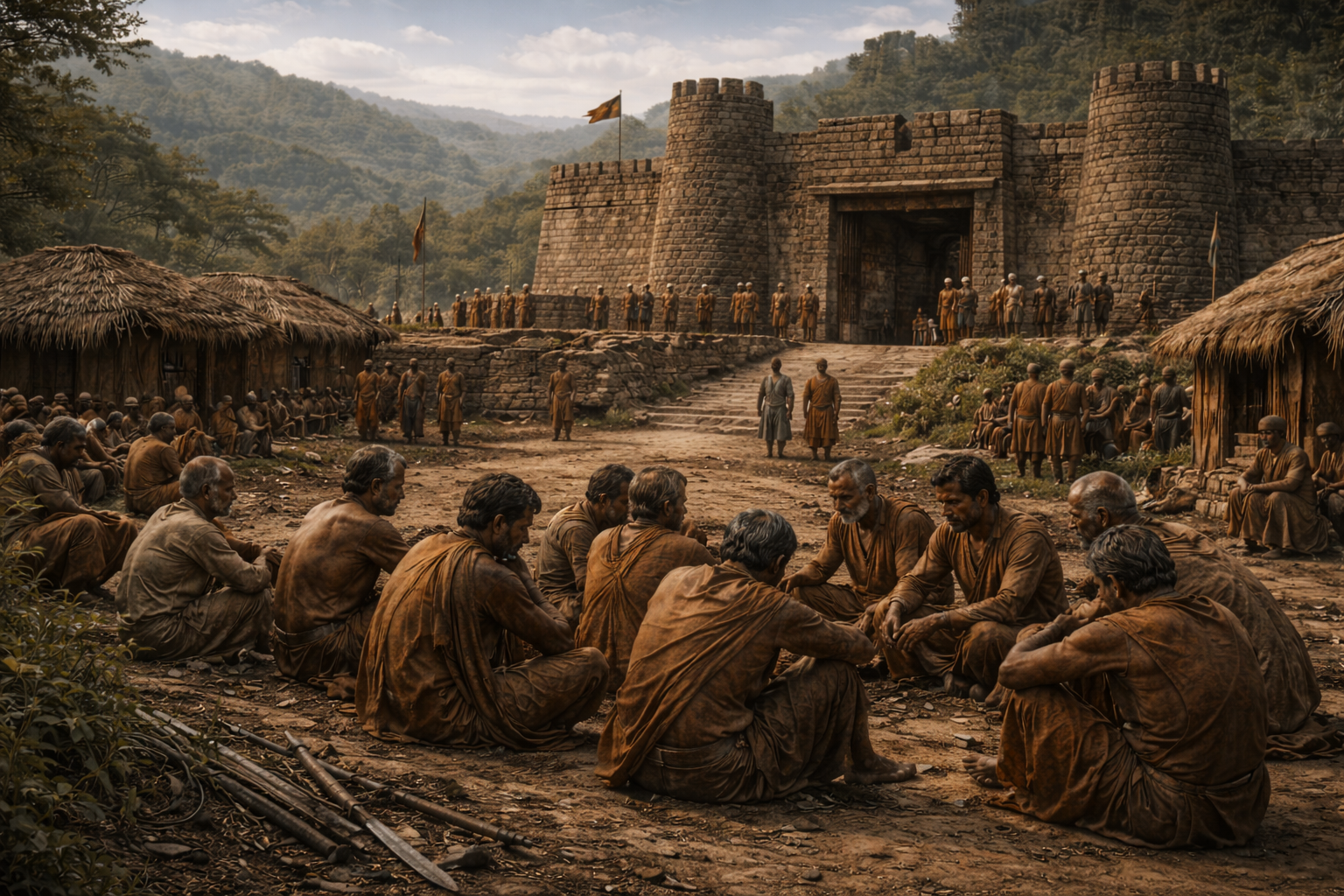
After their capture in 1574, Nilambar and Pitambar were removed from power and taken into Mughal custody. With the fall of Palamu, independent Chero rule came to an end, and Mughal authority was firmly established in the region. Their final days were marked by confinement and the dismantling of the political structure they had built.
Historical records do not provide clear details about the exact circumstances of their execution. However, it is widely believed that the Mughal administration ensured they could no longer inspire resistance. Their removal served as a warning to other tribal rulers who challenged imperial control.
Though their physical lives ended, their sacrifice strengthened tribal memory and identity. Nilambar and Pitambar came to be remembered as martyrs who chose resistance over submission. Their final days transformed them from warrior rulers into enduring symbols of courage, sacrifice, and defiance in tribal history.

Regional Impact
Immediate aftermath in the region
Following the capture of Nilambar and Pitambar in 1574, the Palamu region underwent rapid political and administrative change. Independent Chero rule was dismantled, and Mughal authority was formally established through appointed officials and military presence.
Traditional tribal governance systems were weakened as new revenue structures and administrative controls were imposed. Fortifications were occupied, and strategic locations were brought under imperial supervision to prevent further resistance. Many tribal warriors were disarmed, and movement within the region became closely monitored.
The local population faced social and economic disruption. Increased taxation and loss of autonomy altered daily life, while fear of punishment suppressed open rebellion. Despite this, resentment toward external control continued to grow beneath the surface.